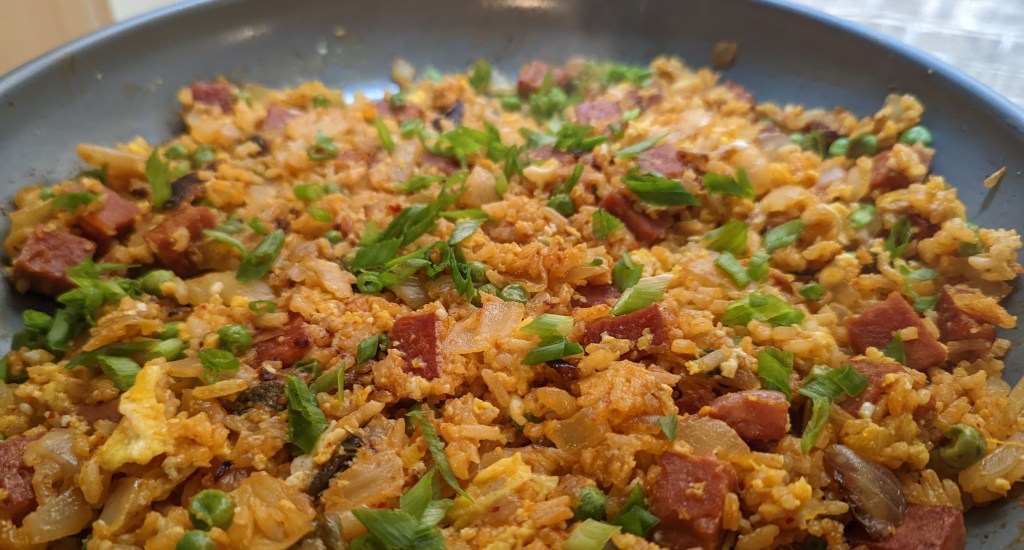
Let’s talk about shifting Korean foreign policy while making a Korean-American classic: spam and kimchi bokkeumbap.
Yoon’s Korea
Yoon Suk-yeol took office as South Korea’s thirteenth president this May. A political newbie by comparison to his predecessors, Yoon is poised to move the Republic of Korea’s foreign policy away from the strategy of the outgoing liberal administration of Moon Jae-in, renewing relations with the US and possibly outgrowing its status as North Korea’s southern counterpart.
Yoon 2022
Yoon is pretty green when it comes to politics, even more so when it comes to foreign policy. He cut his teeth as the nation’s prosecutor general, spearheading the investigations—and later convictions—of former conservative Presidents Lee Myung-bak and Park Geun-hye.
Yoon’s victory at the ballot box came with the smallest margin of victory in the nation’s history (0.73% of the electorate), campaigning on disaffection of young Korean men and promises to investigate corruption of the past administration. Only just scraping by on the ballot doesn’t exactly give his platforms an unshakeable mandate, whether they be domestic or abroad. Whatever he hopes to accomplish during his time in the Blue House (like the White House, but blue), South Korea’s newest president will have to contend with tenuous public support and a National Assembly controlled by the opposition for at least the next two years. But this hasn’t kept the man from crafting his policy visions.
Sunset over Panmunjom, Again
A defining feature of liberal administration’s North Korea strategies since the late 90s, the Sunshine Policy is likely to be retired once more in favor of more hawkish attitudes. This strategy derives its name and spirit from Aesop’s fable of the wind and the sun competing to make a man take off his coat: only when the sun shines brightly enough on the man does he feel comfortable enough to take his jacket off. In line with the fable, liberal administrations have adopted an accommodating, no-strings-attached disposition towards Pyeongyang, encouraging the Hermit Kingdom to cease its hostilities and begin a slow path of friendly reunification. Critics of the policy claim it has only emboldened and enabled the Kim dynasty’s worst behaviors, and that the nuclear pariah shouldn’t be placated when it remains unclear just how much, if anything, Seoul can expect in return.
The crowning achievement of the preceding Moon administration’s foreign policy—and possibly that of Sunshine as a whole—was the 2018 summit brokered between North Korea’s Kim Jong-un and then-US-President Donald Trump in Singapore. The North Korean military conducted no missile tests in all of 2018, but repreive was short lived, when Pyeongyang proceeded to launch the most test missiles in its history the following year. The only serious deterrent to weapons testing in recent years has been the COVID-19 pandemic, but not even that has put an end to northern belligerence.
In contrast to his predecessor, Yoon appears set in his opposition to the Kim regime, going as far to declare North Korea the South’s “greatest enemy.” He maintains a commitment to dialogue, but is foregoing previous administrations’ unconditional humanitarian and economic aid. If Pyeongyang wants something from their neighbor, Yoon expects them to play ball for it. Whether this strategy will prove any more productive on the path to reunification remains dubious, but Yoon can be sure to find supporters on America’s Capitol Hill, hawkish figures looking to deal direct blows to the hermit Communist regime, or fly indirectly in the face of Beijing.
More Than Just a Korea
Declaring Pyeongyang as South Korea’s greatest enemy underscores a broader theme for Yoon’s foreign policy vision: Seoul is more than just one half of a peninsular couple; it’s an economic and cultural power in its own right, deserving more respect and responsibility. For Yoon, that path lies to the east, seeking stronger ties with both the United States, Japan, and beyond. The new president is expected to push for Korea’s admission into the Quadrilateral Security Dialogue, or Quad, a regional partnership between the US, Japan, India, and Australia. Beyond multilateral engagement, Yoon has repeatedly called for South Korea to lean on its American relationships to better leverage its position in the region.
This attempt to bring Korea from the periphery of world events is unlikely to be completely smooth. Restoring Japanese-Korean relations in particular will act as Yoon’s biggest stumbling block to his foreign policy vision, with the President himself calling it the Achilles’ heel of future Korean regional engagement. Having frayed over previous years, the discord once more reared its head this year over attempts to settle grievances of forced labor and sexual slavery by Japan during its colonization of the Korean peninsula. Whether the two nations can bury the hatchet or lower the temperature remains to be seen, but multilateral institutions like the Quad could potentially dampen any future spats.
By adopting a more confrontational attitude toward his northern nuclear neighbor, Yoon may cast off the need to walk on eggshells with Pyeongyang’s most powerful friends: Russia and China. Close ties between Pyeongyang and Beijing in particular often made Yoon’s predecessors more averse to stirring any hornet nests. The new president’s ambitions have instead dismissed this cautious attitude, openly criticizing President Moon’s “Three No’s,” a commitment by Seoul to forgo missile shield systems, long range rocket installations, and an alliance with Japan and the US—three bristly topics for Beijing. Shrugging off Chinese pressure may broaden Seoul’s policy choices, but it could just as well bring it into more direct confrontation with Pyeongyang.
Yoon now wants his Korea to be a “pivotal state” instead of a minor power trampled underfoot by American and Chinese competition in the region. Greater responsibility and visibility will bring greater direct pressure on the nation, but will just as well. Whether South Korea has the capacity for this elevated role remains in question, and only time will tell if Yoon can sway the world’s superpowers to allow his nation a seat at the table.
TL;DR
What’s up?
- South Korea’s newest president, Yoon Suk-yeol, is seeking to move Seoul’s foreign policy in a more assertive direction, in contrast to more neutral tones struck by previous administrations.
- In an attempt for Seoul to be seen as a more serious player on the international stage, Yoon is pushing for closer ties with the US and its allies, while trying to step back from Beijing and Pyeongyang.
Why should I care?
- How South Korea positions itself towards China and especially North Korea could drastically impact US diplomatic strategy and military deployments in East Asia.
Bap to the Top
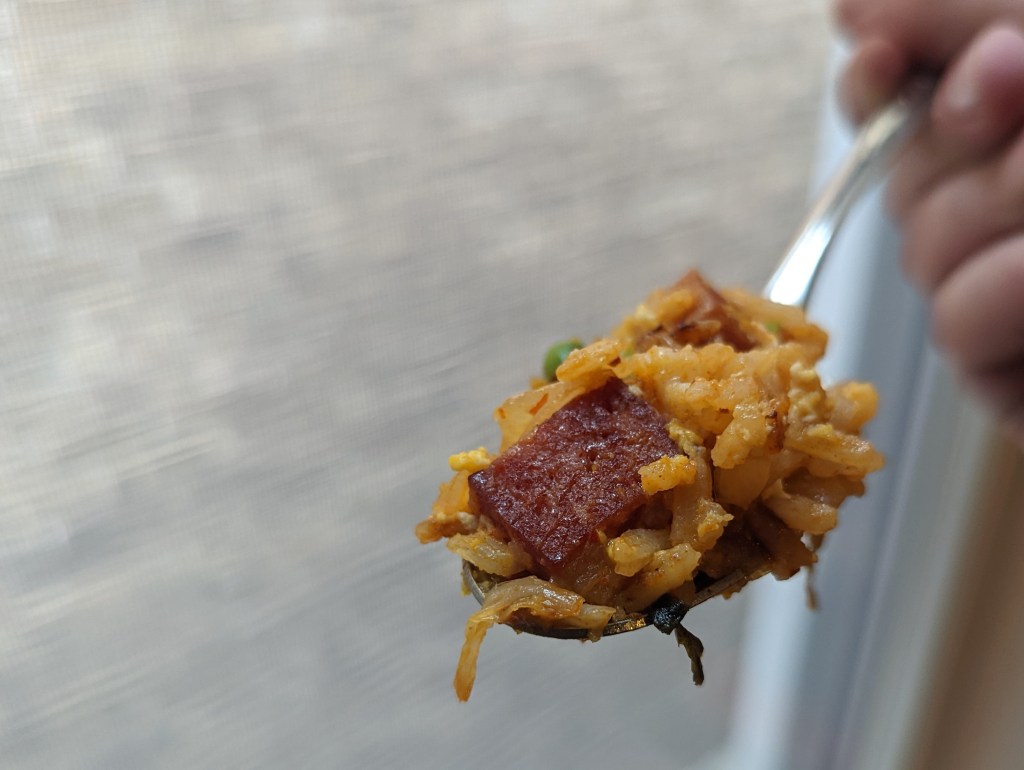
I like to keep leftover rice in my fridge every week, for those inevitable nights when I need the catharsis of making a meal, but simultaneously couldn’t be bothered to mess around in the kitchen more than a half hour. Enter fried rice. Not all fried rices are created equal though. If your knife skills are anything like mine, you could spend most of your time preparing and chopping green beans, or you could take a half a day scouring your city for lap cheong to round out a perfect Yang Chow fried rice. The speed of your kimchi and spam bokkeumbap will be limited only by your ability to dice the aforementioned cabbage and industrially-processed canned meat. If you have greater forethought than me, you can chop these ingredients ahead of time and keep them in the fridge for when they’ll be needed.
The Equipment
Some purists will insist that any respectable fried rice must be made in a wok, gatekeeping with exotic words like guo hei to try and keep folks from whipping up a weeknight dinner without crowding their studio apartment with yet another kitchen tool. I’m not here to drag woks through the mud, but I’ll gladly besmirch purists who look down on adapting. This recipe hasn’t been tried in a wok, but will it work? Yeah, probably.
So how do I fry my rice, then? My dirty little secret: I make fried rice in a nonstick skillet. This is a kitchen crime in some circles, but it’s also a great way to minimize the oil needed for cooking and to keep the cleanup quick and easy.
To be fair, health concerns about the use of nonstick aren’t completely baseless. Polytetrafluoroethylene (PTFE or the brand name Teflon) is a highly nonreactive substance, bringing the nonstick to your nonstick skillet. However, when heated to extremely high temperatures (we’re talking 500+ degrees), the compound begins to vaporize, which can be inhaled and make people pretty sick.
Do people get Teflon flu? Yeah, they do. Do people get Teflon flu in the kitchen? Not really. Illness caused by the inhalation of polymer fumes overwhelmingly happens among those working in the factories producing your kitchenware. So as long as you’re not planning on leaving an empty nonstick skillet on the stove to heat up to the temperature of the sun, you should be safe. But please, only take on as much risk as you’re comfortable with, and if you choose the PTFE path, don’t heat up your skillet on screaming-hot heat when it’s empty. If you use a nonstick pan, heat up the oil on medium heat until it’s shimmering, then put in your SPAM and set the heat to high. If you’d still prefer to err on the side of caution, use stainless steel and a little more oil.
The Rice
Want a great fried rice? Treat your rice right. Respect the rice and every spoonful will be light and airy. If you’d prefer a clumped up mess smeared across your skillet, feel free to skip to the recipe, and seek professional help for your masochism.
First and foremost, give your rice a good rinse. The exterior of a white rice grain is covered in loose starches. When cooked, these starches can cause the rice to stick to itself, forming one big blob. If you’re making paella or whipping up rice to douse with a curry sauce, you don’t need to worry. It’s a whole ‘nother story for fried rice. You can wash the rice directly in whatever vessel you’ll be cooking it in, changing the water once or twice until it’s a little less murky. You won’t be able to wash off all the excess starch, and should be all set after no more than three rounds of rinsing.
Next, make sure to give your rice the chance to dry out. Starch retrogradation (nerd-speak for becoming stale) is the name of the game here. Moisture is the enemy when you’re stir frying, and the one thing that cooked rice has plenty to spare is moisture. Make some rice the night before and let it sit in the fridge overnight after it returns to room temperature. Better yet, take that box of rice that’s been languishing in your fridge after your last Chinese takeout order, and give it a new lease on life in your skillet. If you really just need to scratch that bokkeumbap itch today and you didn’t plan ahead, cook your rice per usual, then lay it out in a single layer in a baking sheet and let it air-dry on the countertop for at least 30 minutes.
The Jang
A fermented paste made from a mixture of red chilis, rice, barley, soybeans, and salt (that according to the only Korean person interviewed for this recipe, isn’t really used in fried rice on the peninsula), gochujang is an ingredient that years ago would have been a novelty found only in your local Asian grocery store. Nowadays, the paste can be found in most major grocers and across fad YouTube recipe videos, but the question remains: what do you do with the rest of your gochujang?
For those of us who didn’t grow up with Korean grandmothers, this question might be trickier to answer. Personally, I’ve had a tub of the stuff sitting in my fridge for the better part of a year. Until a couple months ago, I would only bust it out when I needed some smokey fried rice. In a bid to branch out a little, I’ve started mixing it with yogurt or olive oil for chicken and pork marinades. Mixed with some honey and lime juice, gochujang can help add punch to a fried chicken sandwich, tossing the crunchy cutlet in the sauce right before slapping a bun on it.
The uniquely roasty-toasty heat and radioactive-orange color it lends the fried rice are tough to beat. But whether or not you can justify a tub of gochujang taking up space in your fridge might be a toss up. That said, extra kimchi juice can be used to help add a spicy punch to the rice if you decide the chili paste isn’t for you.
Recipe
With the high temperatures involved, this dish will come together in no time. Just be sure to have all your ingredients prepped ahead of time. If using a nonstick skillet, heat the empty skillet to medium high to start, raising the temperature only after adding ingredients to absorb the heat. Additional kimchi juice can be used if you’d rather not use gochujang. For a more traditional take, bokkeumbap can be served with a fried egg on top of the rice instead of scrambled eggs mixed into the dish.
Inspired by Jeanelle Castro’s original recipe.
Makes 2-3 servings
Ingredients:
- 4 tsp canola or other high-heat cooking oil, divided
- 6 oz (1/2 can) SPAM or other canned meat, cut into 1/2″ cubes
- 1/2 medium yellow onion, diced
- 1/2 cup kimchi, diced, juices reserved
- 1 cup leftover white rice
- 2 tsp gochujang
- 2 tsp fish sauce, if desired
- 1/4 cup frozen peas
- 2 large eggs
- 1 1/2 Tbsp sliced scallion greens
1. Heat 2 tsp of oil in a skillet over medium-high heat. Add the canned meat and increase heat to high, stirring regularly until golden brown and crispy on all sides, about 4 minutes. Remove meat and add onion to the pan, sauteing until softened and just beginning to turn golden, about 30 seconds.
3. Reduce heat to medium to prevent splattering, add the kimchi and return heat to high, stir-frying until fragrant and the kimchi has wilted and turned slightly brown, about 30 seconds.
4. Add the rice to the skillet, breaking clumps apart and heating throughout, about 30 seconds to a minute. Add gochujang, fish sauce, and reserved kimchi juice, stirring until rice is fully coated and a bright orange color. Stir-fry about one minute.
5. Add the peas and stir-fry until heated through, about 30 seconds. Push the rice to edges of the skillet, leaving a well in the center. Add the remaining 2 tsp oil to the center of the skillet before adding the eggs, stirring gently but continuously until curds have set but have not totally cooked. Incorporate the eggs into the rice, stir frying an additional minute. Alternatively, after folding the eggs into the rice, let the rice lie in a single layer and allow to cook undisturbed for 1 to 2 minutes until the bottom layer becomes crispy and brown. Garnish with scallions and serve immediately with cheap beer (if desired).
 TL;DR Foreign Policy